
How Much Time Does a Higher Speed Really Save?
Over 10 km, increasing a constant speed from 10 to 15 km/h saves 20 minutes. Increasing it from 20 to 25 km/h saves only 6 minutes. The same 5 km/h increase does not buy the same amount of time.
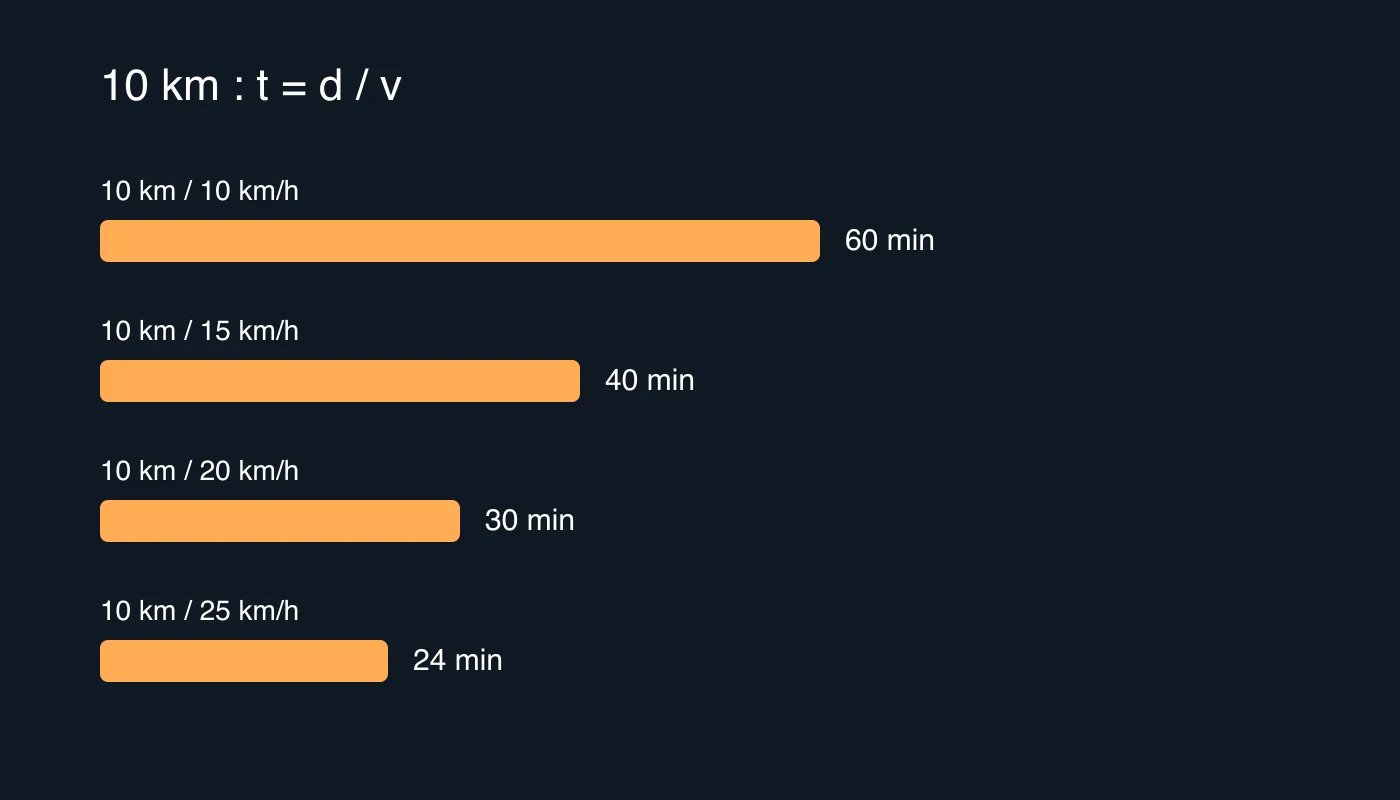
Worked example
Use time in minutes = 60 × distance in km / speed in km/h. Time saved = 60 × d × (1/v1 − 1/v2). Both speeds must be positive and the distance must stay the same.
When the shortcut works
At 10, 15, 20 and 25 km/h, a 10 km trip takes 60, 40, 30 and 24 minutes respectively. Increasing speed by 50% reduces travel time by one third, not one half. Doubling speed halves time in this simplified model.
Use it on a real trip
Apply the formula only to the section whose speed changes. If just 2 km changes from 10 to 15 km/h, the saving is 4 minutes. Fixed waits remain: adding a 10-minute stop changes 60 versus 40 minutes into 70 versus 50.
These are constant-speed scenarios, not arrival predictions or targets to chase. Traffic, gradients and breaks change real journey times. For planning, use a realistic whole-trip average and add fixed waits only if that average excludes them.
Tools and reading
Related Articles
2026-10-31
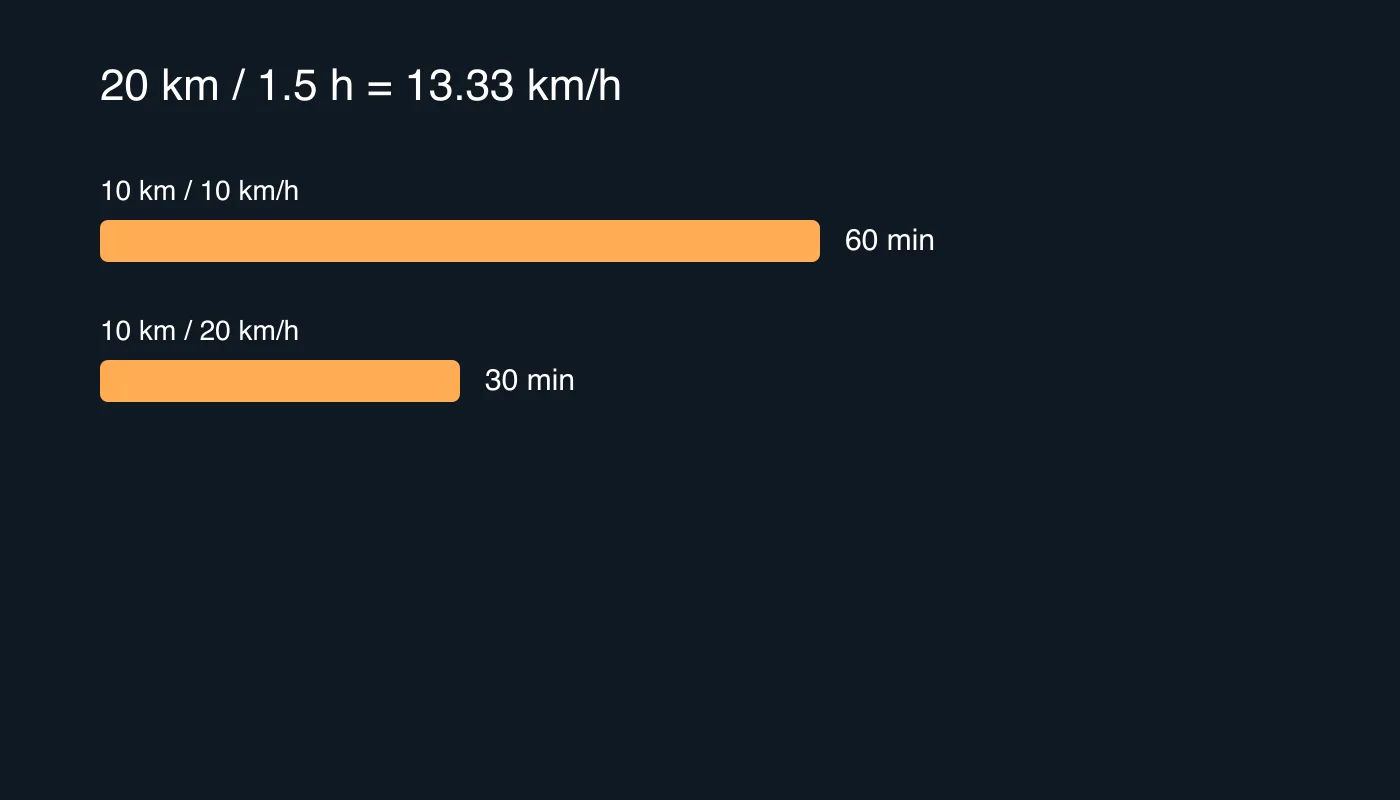
Round-Trip Average Speed: Why 10 and 20 km/h Do Not Make 15
Ride 10 km out at 10 km/h and return the same distance at 20 km/h. Your average speed is 13.33 km/h, not 15. The slower leg occupies more of the journey’s time.

2026-10-01
Average Speed vs Moving Speed: Why Stops Matter
Calculate average and moving speed with a worked example and understand why pauses and recording settings change trip statistics.
2026-10-22
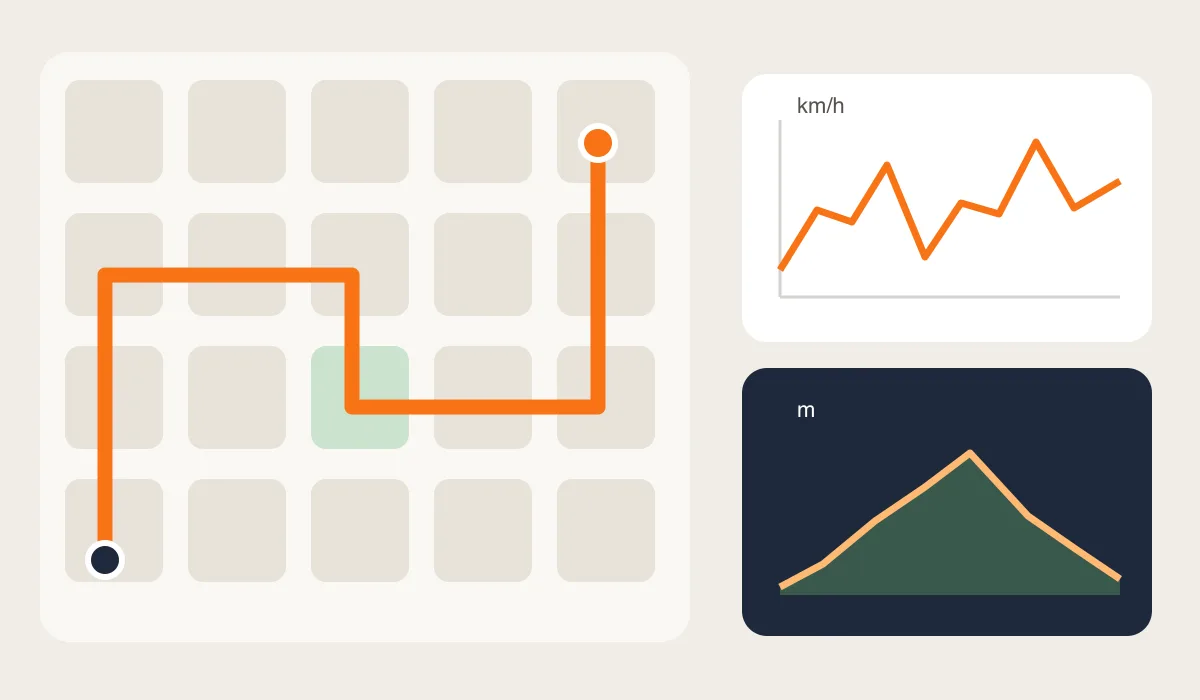
Record a City Walk: Keep Your Route, Walking Speed and Elevation
Turn an unplanned city walk into a useful record. Learn what a route, speed readings and elevation can tell you, and how to review a SpeedX trip afterward.