Small-Wheel Bike Gearing: How to Compare Gear Inches
A folding bike and a full-size bike can have the same chainring and sprocket yet travel different distances with each turn of the pedals. Gear inches account for wheel size, which makes them handy when comparing bikes with different wheels.
Start with one pedal revolution
On a conventional chain drivetrain, divide the front tooth count by the rear tooth count. With 48 teeth up front and 16 at the rear, the wheel turns three times per crank revolution. Multiply that ratio by the tire’s measured outside diameter in inches to get gear inches, or by its rolling circumference to get rollout in meters. For a geared hub, also multiply by the internal ratio of the selected gear.
Compare a small wheel with a large one
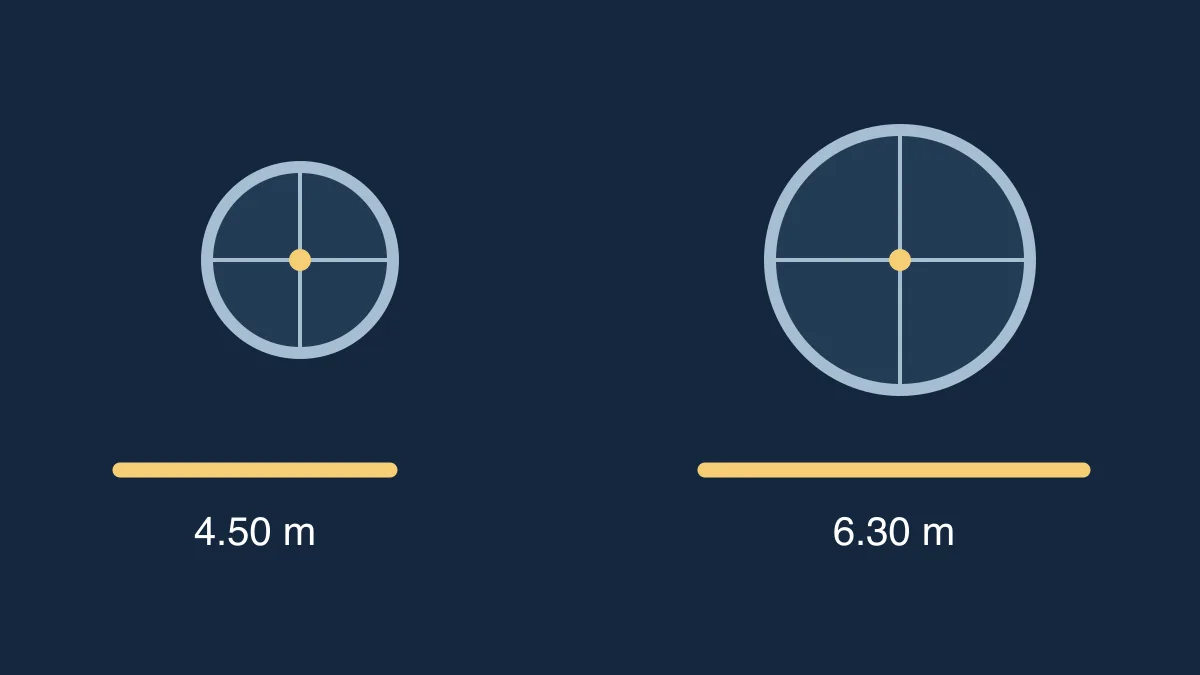
Assume rolling circumferences of 1.50 m and 2.10 m. At 48/16, rollout is 4.50 m and 6.30 m respectively. At 80 crank revolutions per minute, that works out to 21.6 and 30.24 km/h while pedaling steadily. For the small wheel to match the larger bike’s rollout, it would need a ratio of 4.20. A 63/15 pair illustrates the arithmetic. Whether any pair fits depends on the bike.
Measure your own rollout
Mark a tire at the ground, roll the bike straight for one full wheel turn with your weight on it, and measure the distance between marks. Repeat to check consistency. When comparing two bikes, start with their lowest gears if your concern is climbing, or their highest gears if you often run out of cadence on flats. The rollout calculation describes distance per turn. Speed in actual riding also depends on the cadence you can sustain.
Related Articles
2025-06-02
Maximize Your Cycling Performance with SpeedX App
Discover how SpeedX app can transform your cycling experience with real-time speed tracking, elevation monitoring, and comprehensive trip recording. Perfect for casual riders and serious cyclists alike.
2026-10-31
Round-Trip Average Speed: Why 10 and 20 km/h Do Not Make 15
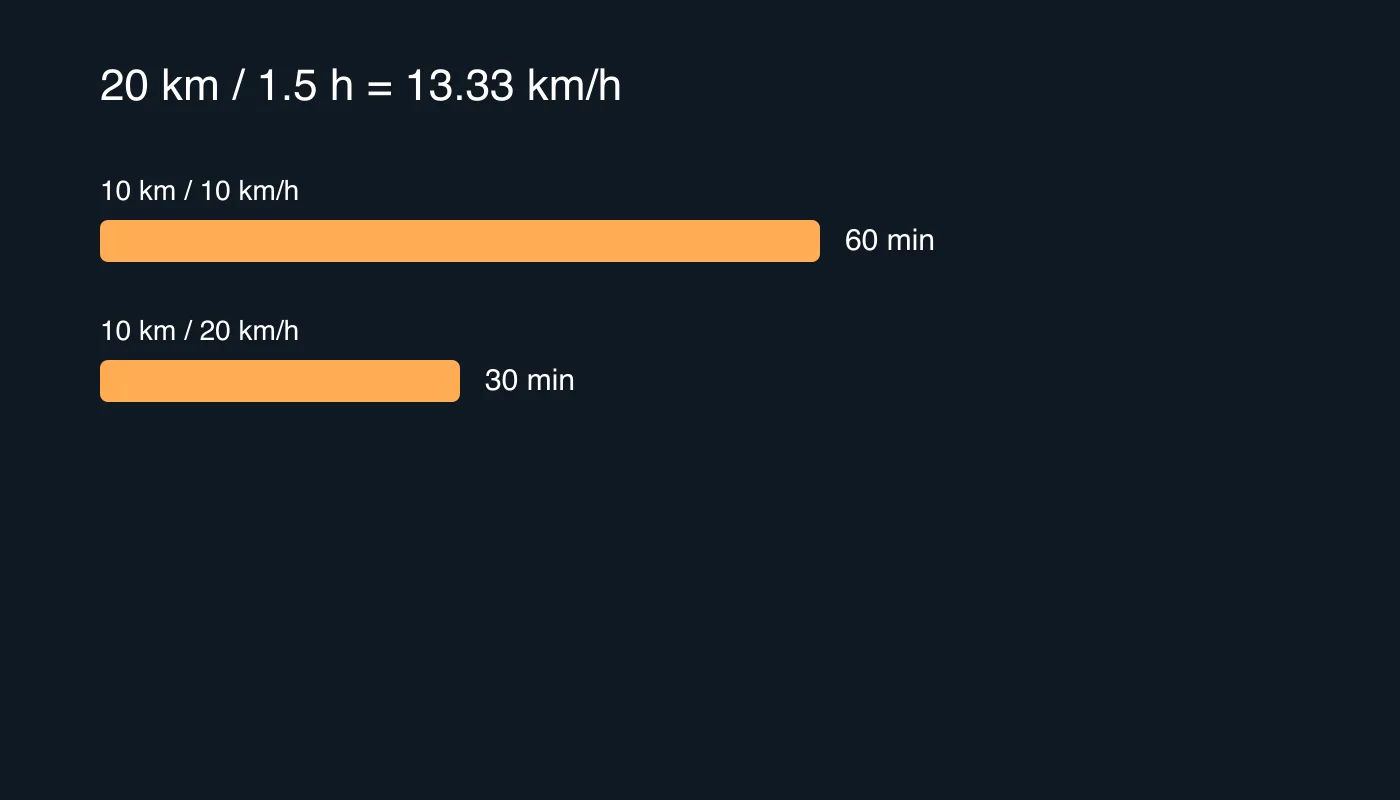
Ride 10 km out at 10 km/h and return the same distance at 20 km/h. Your average speed is 13.33 km/h, not 15. The slower leg occupies more of the journey’s time.
2026-10-31
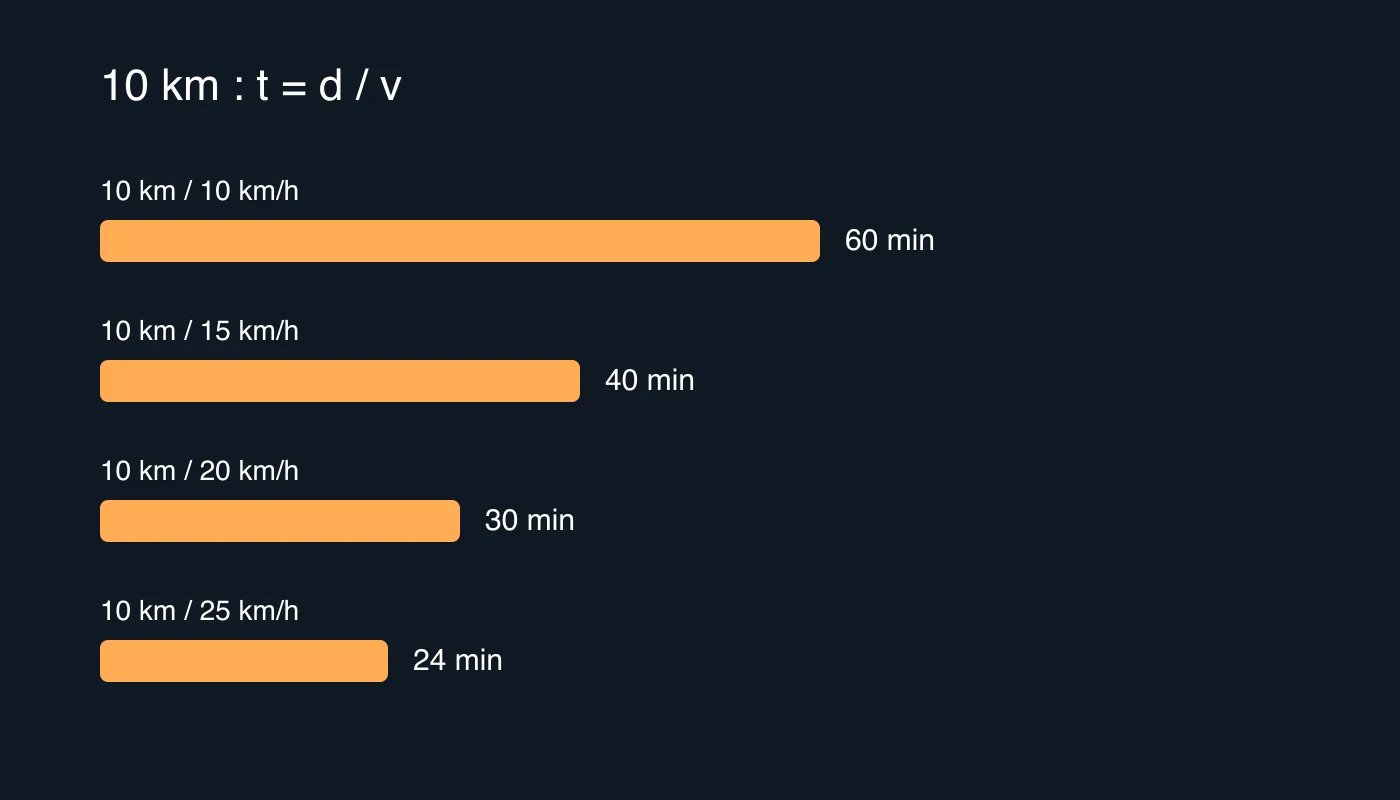
How Much Time Does a Higher Speed Really Save?
Over 10 km, increasing a constant speed from 10 to 15 km/h saves 20 minutes. Increasing it from 20 to 25 km/h saves only 6 minutes. The same 5 km/h increase does not buy the same amount of time.